
- SDLC for Freelance Developers
- Why Transition from Developer to Architect?
- What Does a Solution Architect Do?
- Applying the SDLC to WordPress + Formidable Projects
- Building a Scalable Practice Around Architecture
- Final Thoughts: Enterprise Starts with You
- Ready to architect your next WordPress application?
SDLC for Freelance Developers
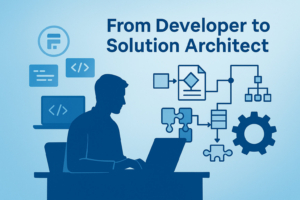
Freelance WordPress developers often start as implementers—building websites, customizing themes, and installing plugins. But as clients grow in complexity, so must your approach. The next stage in your professional journey isn’t just learning more code. It’s about evolving into a Solution Architect—someone who sees the big picture, structures systems strategically, and leverages development methodologies like the Software Development Life Cycle (SDLC).
If you're a Formidable Forms developer ready to scale your business or attract enterprise clients, mastering SDLC principles is the turning point between being “just a developer” and becoming a trusted technical advisor.
Why Transition from Developer to Architect?
As projects grow in scope, the risks grow too:
- Missed requirements turn into costly rework
- Feature bloat kills performance
- Patchwork plugins create long-term maintenance debt
Solution Architects prevent these problems before they start. They ensure that every line of code and every form submission supports the client’s broader business goals.
You’re no longer just building solutions. You’re designing systems.
What Does a Solution Architect Do?
A Solution Architect:
- Defines the overall architecture and technology stack
- Aligns project goals with client business strategy
- Plans using structured models like entity-relationship diagrams
- Applies change management, governance, and risk mitigation
- Leads the team through the SDLC, from planning to support
You’ll go beyond forms and fields—guiding how APIs, custom post types, automation, and views all work together in an enterprise-ready ecosystem.
Applying the SDLC to WordPress + Formidable Projects
The Software Development Life Cycle (SDLC) provides a disciplined framework for delivering reliable systems. Here's how it translates to a Formidable developer’s world:
1. Requirements Gathering
Move from “What do you want?” to “What problem are we solving?”
- Use low-fidelity form prototypes to extract needs.
- Document functional vs. non-functional requirements.
- Engage stakeholders early with use cases and process diagrams.
2. System Design
Architect the flow before the first form is built.
- Define custom post types, taxonomies, relationships.
- Design Views to reflect how users interact with data.
- Structure workflows using conditional logic and approval systems.
3. Development
Build smart, scalable systems—not just forms.
- Use code-based hooks (
frm_entries_before_create,frm_after_create_entry) with clean architecture. - Keep business logic separate from presentation logic.
- Version control your plugin customizations and scripts.
4. Testing
Catch bugs before your client does.
- Create testing checklists for user acceptance.
- Use form validation systematically, both client-side and server-side.
- Run regression tests when updating plugins or WordPress core.
5. Deployment
Treat go-live like a milestone, not a finish line.
- Use staging environments and deployment checklists.
- Migrate data intelligently using Formidable’s import/export tools.
- Train users before handing over the keys.
6. Maintenance & Continuous Improvement
Enterprise clients expect ongoing support.
- Use Kanban boards to manage enhancement requests.
- Prioritize backlog items using client feedback loops.
- Track uptime, bugs, and form submissions with integrated dashboards.
Building a Scalable Practice Around Architecture
Moving to architecture is not just a technical shift—it’s a business shift. Here's how to prepare:
Productize Your Approach
- Offer SDLC-based project packages (e.g., discovery, design, implementation, support).
- Price by value, not just time.
Document Everything
- Maintain systems documentation: data models, user roles, workflows.
- Use wikis, Notion, or Confluence to make your work repeatable and scalable.
Collaborate Like an Architect
- Interface with client IT teams, not just marketing or operations.
- Speak the language of ROI, compliance, and strategic alignment.
Final Thoughts: Enterprise Starts with You
Clients don’t hand out big projects to developers who “just install plugins.” They trust those who can analyze systems, forecast challenges, and deliver scalable solutions. You don't need to abandon WordPress to reach the enterprise. But you do need to evolve your mindset.
By mastering SDLC principles and thinking like a Solution Architect, you're not just building websites—you’re building business-critical systems that scale.
Ready to architect your next WordPress application?
Start by mapping your next project using the SDLC framework, or reach out to collaborate on a Formidable-powered enterprise solution.

Leave a Reply